Agreement Structures and Their Effects on Safe Gaming Initiatives in Cross-Border Betting Operations
Written by Willa Franke · May 16, 2026

Agreement Structures and Their Effects on Safe Gaming Initiatives in Cross-Border Betting Operations
Agreement structures form the backbone of operations where betting platforms cross national boundaries, and their design directly shapes how safe gaming measures get implemented across different jurisdictions. These frameworks range from bilateral pacts between two countries to broader multilateral arrangements involving regional blocs, and each type carries distinct implications for player protection protocols, data exchange systems, and enforcement mechanisms. In May 2026 observers noted fresh updates emerging from several ongoing negotiations, particularly those involving European and Asian markets where operators seek unified standards for deposit limits and self-exclusion databases.
Core Types of Agreement Structures
Operators and regulators rely on several distinct models when structuring cross-border deals. Bilateral agreements typically outline specific rules for licensing reciprocity and revenue sharing while embedding clauses that require joint monitoring of player behavior patterns. Multilateral frameworks, by contrast, establish shared technical standards that allow platforms to apply consistent responsible gambling tools across multiple territories at once. Hybrid structures combine elements of both, often incorporating industry associations as intermediaries to streamline compliance reporting. Researchers tracking these models have documented how bilateral deals tend to produce faster implementation of localized safeguards, whereas multilateral ones enable wider data pooling for identifying at-risk users across borders.
Data from regulatory filings shows that agreements signed in early 2026 placed heavier emphasis on real-time API connections between operators and national exclusion registries. This technical requirement ensures that a player who sets a deposit limit in one country cannot simply bypass it by accessing the same platform through a partner jurisdiction. Those who've examined the fine print of recent pacts note that penalty clauses now tie directly to failures in safe gaming enforcement rather than solely to tax obligations.
Impact on Player Protection Mechanisms
Safe gaming initiatives gain concrete advantages when agreement structures mandate synchronized verification processes. Platforms operating under these deals must integrate age verification, spending caps, and session time alerts using identical technical specifications, which reduces the chance of players exploiting regulatory gaps. Evidence from industry reports indicates that operators covered by such agreements recorded measurable drops in high-velocity betting sessions during the first quarter of 2026 compared with platforms lacking comparable cross-border ties.
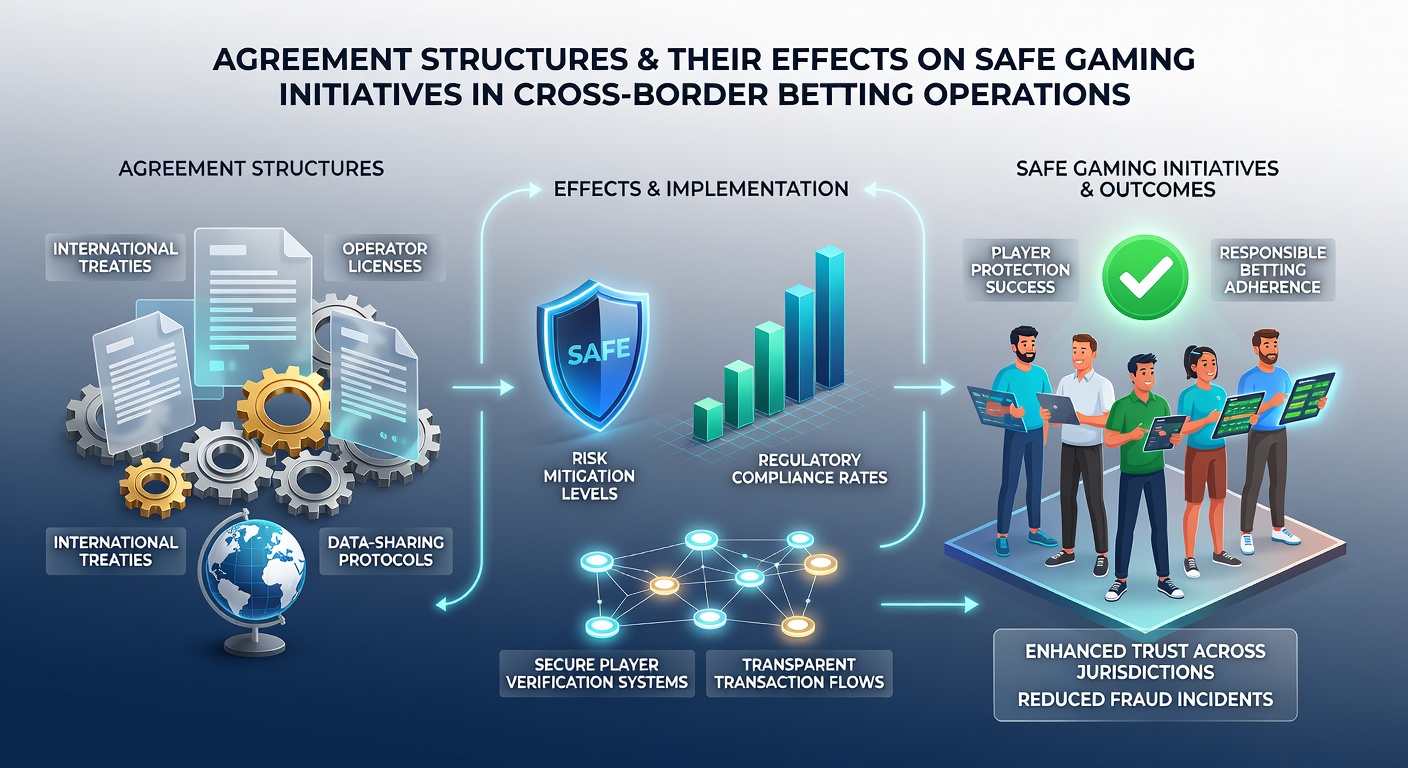
What's significant is how these structures influence the rollout of voluntary deposit limit tools. When two or more countries align their data standards through an agreement, operators can apply a single limit across all linked accounts without creating separate profiles. Studies conducted by academic teams in Australia and Canada have tracked how this unified approach cuts down on instances where users reset limits by switching jurisdictions. The same research highlights that enforcement becomes more straightforward because regulators on both sides of the border can audit the same dataset rather than piecing together fragmented records.
Regional Variations and Implementation Trends
North American frameworks often prioritize state-to-state or province-to-province pacts that focus on shared geofencing and payment monitoring, while European arrangements lean toward harmonized directives that cover multiple member states simultaneously. In the Asia-Pacific region, newer agreements emerging in 2026 have begun incorporating provisions for mobile-specific safeguards, such as location-based session caps that activate when users cross certain digital boundaries. Figures released by the European Gaming and Betting Association reveal that platforms operating under these updated structures achieved higher compliance rates with mandatory reality check prompts during live dealer sessions.
But here's the thing: success hinges less on the agreement type itself and more on the granularity of the safe gaming clauses embedded within it. Agreements that specify exact thresholds for loss limits, cooling-off periods, and third-party audit frequencies produce stronger results than those leaving such details to later negotiations. Observers tracking operations in May 2026 pointed to several Caribbean licensing deals that adopted this detailed approach and subsequently reported improved cooperation between operators and local support services for problem gambling referrals.
Challenges in Maintaining Consistent Safeguards
Cross-border operations still face hurdles even when formal agreements exist. Differences in data privacy laws can slow the transfer of player information needed for proactive interventions, and currency fluctuations sometimes complicate the accurate calculation of deposit limits across borders. Regulatory bodies in multiple regions have responded by requiring periodic joint reviews that reassess whether existing structures continue to support emerging technologies like instant withdrawal systems. Those reviews, conducted as recently as spring 2026, have led some operators to adopt additional internal controls that exceed the minimum standards set by their governing agreements.
One study revealed that platforms working under older bilateral deals without updated safe gaming addendums struggled more with identifying multi-jurisdiction play patterns. In response, several regulators now insist on sunset clauses that force renegotiation of protection measures every 24 months, ensuring that agreement structures evolve alongside new betting formats and user interfaces.
Conclusion
Agreement structures continue to determine how effectively safe gaming initiatives travel across borders, with their specific terms dictating everything from data sharing speed to enforcement reach. As operations expand in 2026, the models that pair clear technical requirements with regular review mechanisms demonstrate the strongest alignment between commercial activity and player protection goals. Those monitoring the sector expect further refinements to these frameworks as new markets open and existing pacts incorporate lessons from current implementations.