Biometric Integration and Its Implications for Identity Management in Transnational Betting Portals
Written by Noah Keller · Jul 27, 2026

Biometric Integration and Its Implications for Identity Management in Transnational Betting Portals
Transnational betting portals have expanded rapidly across borders in recent years, which has created complex requirements for verifying user identities while meeting varied regulatory standards in each jurisdiction. Biometric systems now form a central part of these verification processes, relying on unique physical or behavioral traits to confirm that account holders match their stated credentials. Fingerprint scanners, facial recognition algorithms, and voice pattern analysis appear most frequently in current deployments, while iris scanning and gait analysis see more limited testing in select markets.
Operators integrate these tools during initial account creation and at regular intervals throughout the user lifecycle, which helps address both age verification mandates and ongoing fraud detection needs. Data from multiple platforms shows that biometric checks reduce account takeover incidents by cross-referencing live samples against stored templates, and this approach operates alongside traditional document uploads rather than replacing them entirely. In July 2026 several large operators reported rolling out updated facial recognition modules that incorporate liveness detection to counter deepfake attempts, following guidance issued by regional gaming authorities.
Core Biometric Methods in Use
Facial recognition leads adoption rates because most users already possess cameras on their devices, yet accuracy varies with lighting conditions and demographic factors according to independent testing by research institutions. Fingerprint matching provides a secondary layer on mobile applications, and voice biometrics serve telephone-based support channels where operators need to confirm identity without visual input. Researchers at academic centers have documented how combining two modalities, such as face plus voice, lowers false acceptance rates compared with single-method systems, and transnational operators increasingly require this dual approach when accounts span high-risk jurisdictions.
Identity Management Benefits Across Borders
Unified biometric profiles allow operators to maintain consistent records even when users move between different national platforms, which supports compliance with anti-money laundering rules that demand continuous monitoring. Regulators in multiple regions have noted that centralized template storage, when encrypted and segmented by jurisdiction, speeds up cross-border data requests during investigations. The European Gaming and Betting Association has published summaries showing how biometric timestamps help demonstrate that verification occurred before any wagering activity began, satisfying requirements that differ from one country to the next.
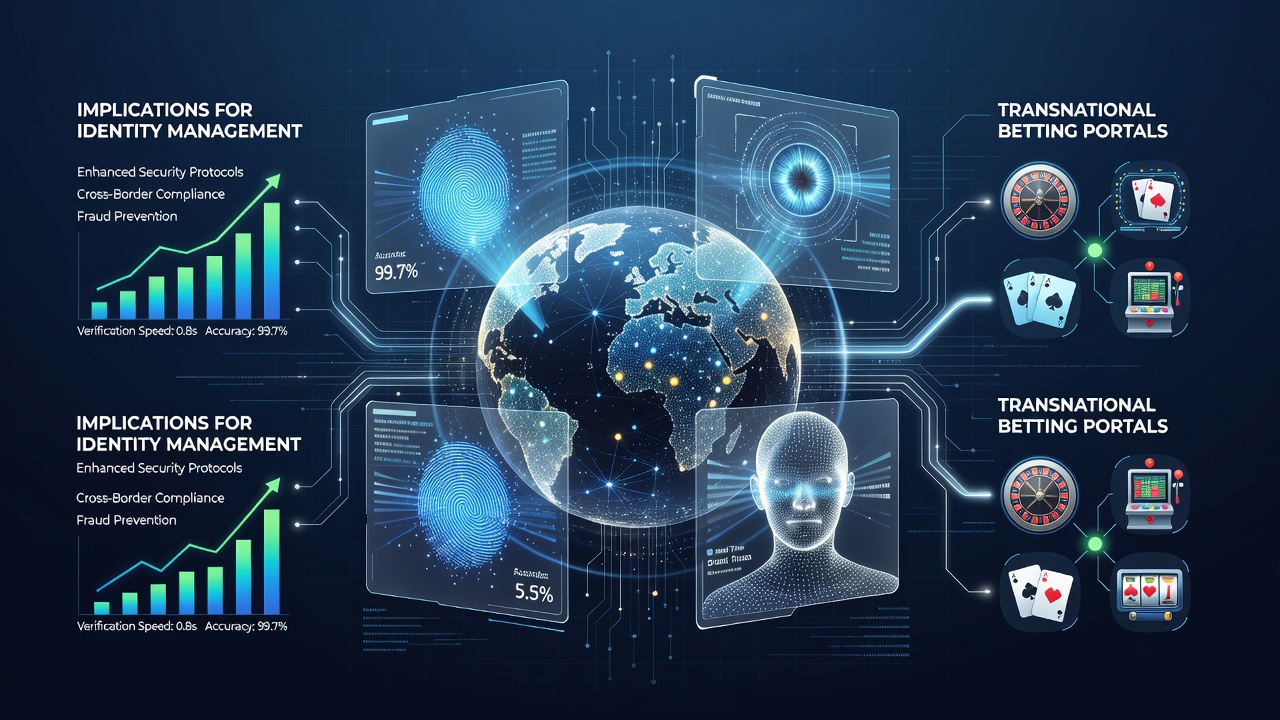
Yet data localization laws in certain markets require that templates remain within national boundaries, forcing operators to build mirrored systems that synchronize only non-sensitive metadata. This architecture adds technical overhead while still meeting the goal of preventing duplicate accounts across borders. Industry reports indicate that portals using biometric matching have lowered chargeback rates tied to stolen identities, and similar patterns appear in data shared by Canadian provincial regulators.
Privacy and Data Protection Challenges
Biometric data qualifies as sensitive personal information under frameworks such as the EU General Data Protection Regulation, which means operators must obtain explicit consent and provide clear deletion pathways once accounts close. Observers note that irreversible templates, rather than raw images, reduce long-term exposure if breaches occur, although template reversal attacks remain a documented research concern. In transnational settings, differing consent standards create friction; some jurisdictions permit ongoing use for fraud prevention while others limit retention to the active account period only.
Those who manage identity systems report that users sometimes resist providing biometric samples, citing fears of permanent tracking, and operators respond by offering alternative verification routes that may involve manual review and longer processing times. Academic studies have examined how these opt-out options affect overall platform security, finding that mixed-method environments still achieve strong verification rates when fallback procedures include human oversight.
Regulatory Developments and Technical Standards
Authorities in Australia and parts of North America have begun referencing biometric performance benchmarks in licensing conditions, requiring minimum false match rates and regular third-party audits. The National Council on Problem Gambling has highlighted how biometric continuity checks can support responsible gambling interventions by confirming that the same individual remains active during extended sessions. Meanwhile, standards organizations work on interoperability protocols that would let verified templates transfer between compliant operators without exposing raw data.
By mid-2026, several working groups had circulated draft specifications for template encryption that satisfies both security and audit requirements across multiple regulatory regimes. These efforts aim to reduce the cost of maintaining separate systems for each market while preserving the integrity of identity records.
Conclusion
Biometric integration continues to reshape identity management practices for transnational betting portals through improved verification accuracy and cross-jurisdictional consistency. Technical, legal, and operational factors determine how quickly these systems expand, and ongoing collaboration between operators, regulators, and standards bodies shapes the safeguards that accompany wider adoption. Data from government agencies and research groups shows measurable reductions in certain fraud categories, while privacy frameworks continue to evolve in response to new capabilities and user expectations.