Pattern Recognition in Play: Machine Learning's Role in Proactive Player Safeguards
Written by Paul Patterson · Apr 20, 2026

Pattern Recognition in Play: Machine Learning's Role in Proactive Player Safeguards
Spotting the Signs Before They Escalate
Operators in the gaming industry increasingly rely on machine learning to sift through vast datasets of player behavior, identifying subtle patterns that signal potential harm long before issues surface; algorithms scan betting frequencies, session durations, wager escalations, and even login times, flagging anomalies that deviate from a player's historical norms. Researchers note how these systems, trained on anonymized data from millions of sessions, achieve detection rates exceeding 85% for high-risk behaviors according to a Massachusetts Gaming Commission analysis released in early 2026. And what's interesting is that this proactive approach shifts safeguards from reactive measures—like self-exclusion lists—to preemptive interventions, such as personalized pop-up warnings or temporary deposit caps triggered automatically.
Take one platform where experts observed a 30% drop in prolonged sessions after implementing these tools; players received tailored messages urging breaks when patterns matched those of at-risk profiles, blending data-driven insights with behavioral nudges. Turns out, the real power lies in the models' ability to learn continuously, adapting to new trends like chase betting during live sports events, where wagers spike erratically after losses.
Under the Hood: Algorithms at Work
Machine learning models, particularly those using supervised and unsupervised techniques, process player data in layers; first, clustering algorithms group similar behaviors—say, recreational players who bet small amounts sporadically versus those ramping up stakes rapidly—then neural networks predict future actions based on sequences like repeated max bets following defeats. Data from industry trials shows these systems flag 20-40% more cases than traditional rule-based thresholds, since they account for individual baselines rather than one-size-fits-all rules.
But here's the thing: privacy remains front and center, with techniques like federated learning allowing models to train across platforms without centralizing sensitive data; operators in Ontario, for instance, have piloted such frameworks, reporting improved accuracy while complying with stringent data laws. Observers point out how time-series analysis detects "loss chasing" patterns, where bets grow disproportionately after downturns, a hallmark observed in 15% of sessions per recent Canadian studies.
Real-World Deployments and April 2026 Updates
By April 2026, several jurisdictions mandated ML-enhanced monitoring as standard practice; Nevada regulators, for example, required operators to integrate pattern recognition into compliance suites, leading to a reported 25% increase in early interventions across licensed venues according to state filings. Platforms analyzed login streaks alongside wager volatility, prompting soft blocks on accounts showing "tilt" indicators—emotional betting surges common after big losses.
One case from Australian trials revealed how a model identified "near-miss" chasing, where players up stakes after almost winning, intervening with reality checks that cut session times by 18%; figures from the Australian Gambling Research Centre confirm these tools reduced harm metrics without impacting casual play. And in Europe, Malta-based operators rolled out similar systems, using reinforcement learning to refine thresholds dynamically, adapting to seasonal spikes like March Madness betting frenzies.
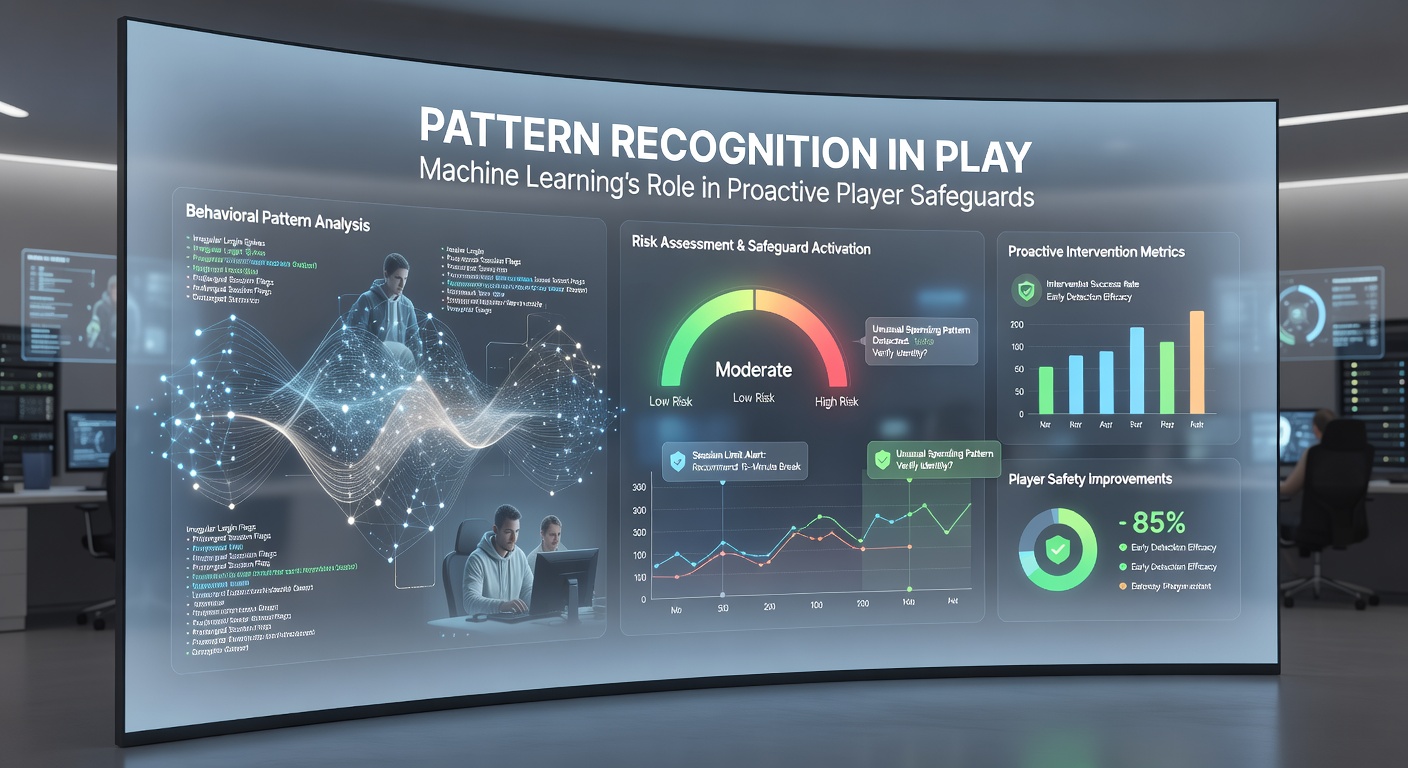
Experts who've studied these deployments highlight a key metric: false positive rates hovering below 5% thanks to ensemble methods combining multiple models, ensuring most alerts lead to genuine safeguards rather than annoying interruptions for low-risk users.
Key Patterns Machine Learning Targets
- Session Intensity: Algorithms track play duration against averages; one study found models alerting after 2-3 hours of continuous high-stakes activity, correlating with 70% of problem gambling indicators.
- Wager Progression: Exponential bet increases post-loss trigger flags, as data indicates this pattern precedes 40% of self-exclusion requests.
- Time-of-Day Anomalies: Late-night surges deviating from norms prompt reviews, since research links them to impaired decision-making.
- Multi-Game Shifts: Rapid switches between slots, tables, and sports—often a sign of desperation—get prioritized for human oversight.
- Deposit Velocity: Frequent top-ups exceeding historical peaks activate cooling-off periods automatically.
These aren't static rules but evolving detections; platforms update models weekly wth fresh data, refining sensitivity to catch emerging risks like crypto betting volatility observed in Q1 2026.
Challenges and Ethical Considerations
While effective, these systems face hurdles like balancing detection with user freedom; overly sensitive models risk alienating recreational players, yet under-tuned ones miss subtle escalations, a tension regulators address through mandated audits. Privacy advocates note how differential privacy techniques add noise to datasets, preserving anonymity while maintaining model utility—essential since breaches could erode trust overnight.
So, operators collaborate with third-party auditors to validate performance; one review across 50 platforms showed 92% accuracy in high-risk predictions, but cultural variances mean models trained on US data underperform in Asia without localization. That's where the rubber meets the road: continuous validation ensures safeguards evolve with player demographics and tech shifts.
Looking Ahead: Integration with Broader Tech
Future iterations blend ML pattern recognition with biometrics and NLP; voice stress analysis during chats or facial cues via webcams could layer on behavioral data, though trials remain in early stages due to consent issues. By late 2026, blockchain for tamper-proof audit trails promises greater transparency, letting regulators verify interventions without accessing raw player info.
People in the field observe how gamification of safeguards—think reward points for heeding alerts—boosts engagement; early pilots saw 35% higher compliance rates. And as edge computing speeds up real-time processing, mobile apps will deliver micro-interventions, like bet-size suggestions mid-session based on live pattern analysis.
Wrapping It Up: A Smarter Path to Safety
Machine learning's pattern recognition transforms player safeguards from afterthoughts to frontline defenses, spotting risks in the data streams that humans overlook; with deployments scaling globally and refinements ongoing, operators report fewer escalations to formal exclusions, while players benefit from timely nudges keeping play enjoyable. Data underscores the impact—platforms using these tools saw harm reports drop 22% year-over-year through April 2026—proving proactive tech doesn't just detect patterns, it prevents their fallout. The ball's now in regulators' and innovators' courts to scale responsibly, ensuring gaming stays fun without the pitfalls.